



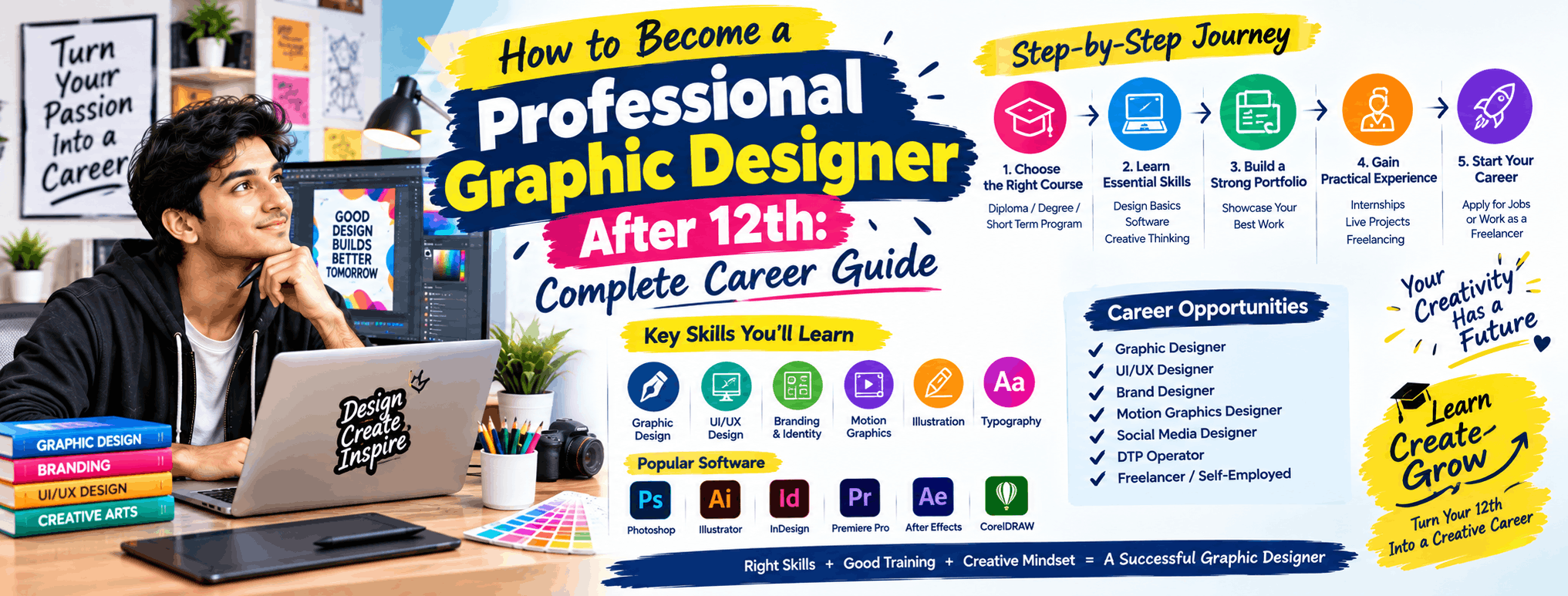
How to Become a Graphic Designer After 12th
Choosing what to do after 12th is a confusing phase for most students, especially if you enjoy creativity but aren't sure how to turn it into a career. Graphic design is one of the few fields where you can start early, learn practical skills quickly, and begin working on real projects within months. This guide walks you through everything you need to know about how to become a graphic designer after 12th - the skills you need, the software to learn, how to build a portfolio, the learning path to follow, and the kind of job or freelance opportunities that open up once you're job-ready.
Whether you're a commerce, science, or arts student, graphic design does not require a specific stream. What it does require is consistent practice, an eye for visuals, and the right guidance to avoid wasting time on the wrong learning path.
What Does a Graphic Designer Actually Do?
A graphic designer creates visual content that communicates a message - this could be a brand logo, a social media post, a website layout, packaging design, or a printed brochure. Businesses need designers to make their products, services, and communication look professional and appealing. The work is a mix of creativity and strategy - you're not just making things look nice, you're solving a communication problem visually.
Skills You Need to Become a Professional Graphic Designer
Before jumping into software, it helps to understand the core skills that separate a hobbyist from a professional designer.
- Design fundamentals: Understanding of color theory, typography, layout, spacing, and visual hierarchy.
- Software proficiency: Comfort with industry-standard tools used daily in design studios and agencies.
- Creativity with logic: Coming up with original ideas while keeping the client's brand and audience in mind.
- Attention to detail: Small things like alignment, consistent fonts, and correct spacing matter a lot in professional work.
- Communication skills: You'll often need to explain your design choices to clients or team members and take feedback well.
- Time management: Design projects usually come with deadlines, so managing multiple tasks matters.
Essential Software and Tools to Learn
You don't need to master every design tool at once, but these are the ones most commonly used in the industry:
- Adobe Photoshop - for photo editing, image manipulation, and digital art
- Adobe Illustrator - for vector graphics, logos, and icons
- Adobe InDesign - for multi-page layouts like brochures, magazines, and books
- Canva - useful for quick social media designs, though not a replacement for Adobe tools in professional work
- Figma - increasingly used for UI/UX and web design collaboration
Learning these tools properly - not just watching tutorials but actually practicing daily - is what makes the biggest difference in how fast you become job-ready.
Step-by-Step Learning Path After 12th
Step 1: Learn Design Fundamentals First
Before touching software seriously, spend time understanding color combinations, font pairing, grid systems, and composition. Many beginners skip this and end up with designs that "look off" without knowing why.
Step 2: Get Trained on Industry Software
Self-learning through YouTube is possible, but it often leads to gaps in knowledge and bad habits that are hard to unlearn later. A structured course helps you learn tools in the correct order, understand real workflows, and get feedback on your work - something that's hard to get from random online videos.
If you want structured classroom training and guided learning, GDI's Graphic Design course may be worth considering, especially if you prefer hands-on practice with an instructor correcting your work in real time rather than learning alone.
Step 3: Work on Practice Projects
Start with small projects - redesign an existing poster, create a fictional brand logo, design a social media post for a made-up business. The goal is to build volume and variety in your work.
Step 4: Build a Portfolio
Your portfolio matters more than your certificates. Employers and clients want to see actual work, not just a list of software you know.
- Include 10-15 of your best pieces, not everything you've ever made
- Show variety - logos, social media posts, posters, packaging mockups, a website UI concept
- Add a short note on each project explaining the brief and your design decisions
- Use platforms like Behance to showcase your portfolio online
Step 5: Take Up Internships or Freelance Projects
Once you have a basic portfolio, start applying for internships or small freelance gigs. Working on real client briefs teaches you things no course can - handling feedback, revisions, and deadlines.
Common Mistakes Beginners Make
- Learning too many tools at once instead of getting comfortable with one or two first
- Copying designs exactly instead of using them as inspiration to create original work
- Ignoring typography and focusing only on colors and images
- Ivertsizing quantity over quality in their portfolio, showing 50 average designs instead of 10 strong ones
- Not seeking feedback from experienced designers or mentors before finalizing projects
Career and Freelance Opportunities After Learning Graphic Design
Once you're skilled and have a solid portfolio, several paths open up:
- In-house designer at a company handling their marketing and branding visuals
- Design agency roles working across multiple client projects
- Freelancing on platforms offering flexibility to work with clients directly
- Specializing further into UI/UX design, motion graphics, or branding
- Starting your own design studio once you have enough experience and client relationships
Many designers also combine graphic design with skills like video editing or web design to offer more services and increase their opportunities.
Graphic Design Course vs Self-Learning: Which Is Better?
| Factor | Self-Learning (YouTube/Free Resources) | Structured Course |
|---|---|---|
| Learning Order | Random, depends on what you search | Structured, step-by-step curriculum |
| Feedback on Work | Little to none | Regular feedback from instructors |
| Doubt Solving | Limited, mostly comments/forums | Direct interaction with trainers |
| Portfolio Guidance | You're on your own | Guided project selection and review |
| Time to Job-Readiness | Varies widely, often longer | More predictable with consistent practice |
FAQs
Do I need to know drawing to become a graphic designer?
No, you don't need traditional drawing skills. Graphic design relies more on software tools, layout sense, and understanding of visual communication than hand-drawing ability. Some illustration skills can help in certain niches, but they're not mandatory for most design roles.
Can I become a graphic designer without a degree?
Yes, graphic design is a skill-based field where your portfolio matters more than a formal degree. Many professional designers have learned through diploma or certificate courses and built strong portfolios instead of pursuing a traditional degree.
How long does it take to learn graphic design after 12th?
It depends on how consistently you practice and the course structure you follow. Basic proficiency in tools can come within a few months, but becoming genuinely job-ready with a solid portfolio usually takes sustained practice beyond just the course duration.
Which software should I learn first as a beginner?
Start with Adobe Photoshop for photo editing basics, then move to Illustrator for vector-based work like logos. Once you're comfortable with these two, you can explore InDesign for layouts and Figma if you're interested in UI/UX design.
Is graphic design a good career option in India?
Graphic design remains in steady demand as businesses, startups, and agencies constantly need visual content for branding and marketing. It also offers flexibility since you can work in-house, at an agency, or freelance depending on your preference.
Can I combine graphic design with digital marketing?
Yes, and many designers do. Understanding digital marketing basics helps you design content that performs better on social media and ad campaigns, making you more valuable to employers and clients.
What should I include in my first design portfolio?
Include your strongest and most varied work - a logo concept, a social media post design, a poster, and maybe a simple brand identity project. Quality matters more than quantity, so only include work you're genuinely proud of.
About Graphic Design Institute
Graphic Design Institute (GDI) is a training institute based in Rohini, Delhi, offering practical, hands-on courses in Graphic Design, Video Editing, Web Design, Web Development, Digital Marketing, AutoCAD 2D & 3D, and Data Analytics. The institute focuses on guided, classroom-based learning to help students build real skills and portfolios relevant to the current design industry.
If you're exploring how to become a graphic designer after 12th and want structured, mentor-led training, you can reach out to GDI's team to learn more about the Graphic Design course details.
Interested in learning more? Explore our Graphic Design course or register now for a free demo class at Graphic Design Institute.