



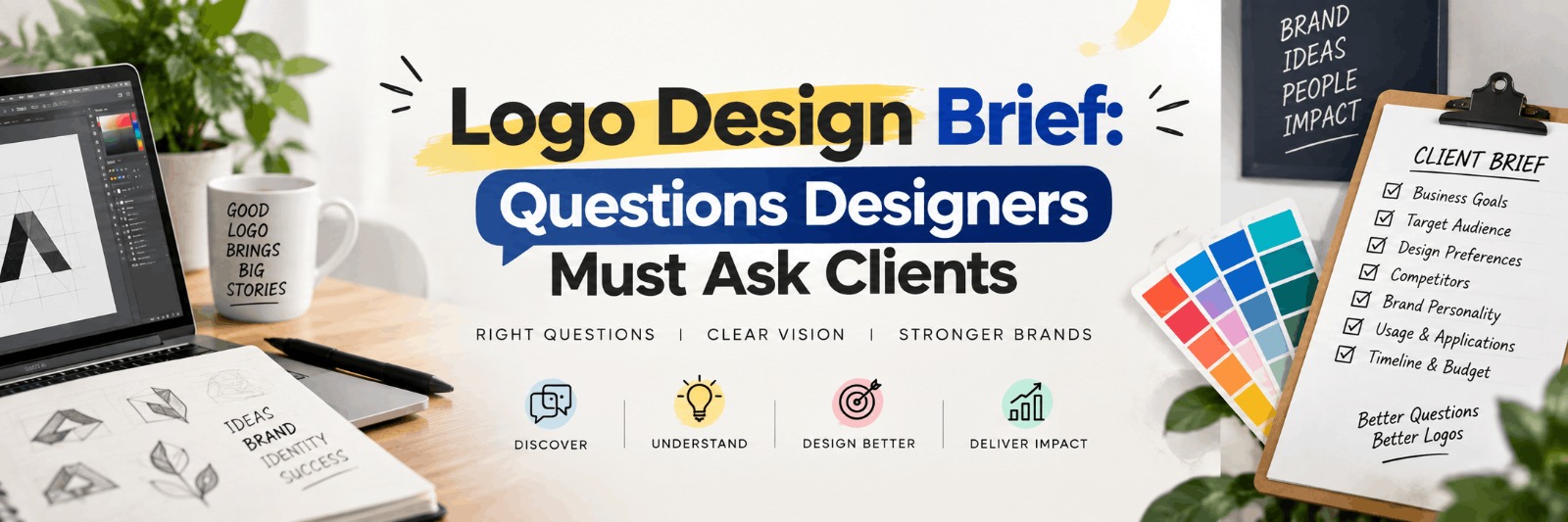
Logo Design Brief: Questions Designers Must Ask Clients
Every logo project that goes wrong usually goes wrong at the very start, not at the final design stage. A designer jumps into Illustrator with half the information, the client isn't sure what they actually want, and three revisions later everyone is frustrated. A proper logo design brief fixes this problem before it begins. This article explains what a logo design brief is, why it matters, and the exact questions designers should ask clients to avoid confusion, endless revisions, and mismatched expectations. Whether you're a freelancer, an in-house designer, or a student learning the ropes, this guide will help you build a repeatable process that saves time and produces better logos.
What Is a Logo Design Brief?
A logo design brief is a document or conversation that captures all the information a designer needs before creating a logo. It covers the business background, target audience, design preferences, technical requirements, and project logistics. Think of it as a roadmap - without it, you're designing blind and hoping the client likes what you guessed.
Many beginner designers skip this step because they're eager to start sketching. Experienced designers know that a strong brief often saves more time than it takes to prepare, because it prevents rework later.
Why Asking the Right Questions Matters
Clients are rarely trained in design language. They might say "make it look premium" or "something modern" without explaining what that means to them. Your job is to translate vague ideas into visual direction through smart questioning.
- It reduces the number of revision rounds.
- It builds client trust because they feel heard and understood.
- It gives you, the designer, a stronger creative direction instead of guessing.
- It protects you from scope creep later in the project.
Key Questions to Ask Before Starting a Logo Design
1. Tell Me About Your Business
Start broad. Ask what the company does, how long it has existed, what makes it different from competitors, and what its long-term vision looks like. A logo for a 2-year-old startup and a 20-year-old family business need very different tones.
2. Who Is Your Target Audience?
A logo aimed at teenagers looks nothing like one aimed at corporate clients. Ask about the age group, profession, income level, and lifestyle of the people the business serves. This directly influences colour choices, typography, and overall style.
3. What Are Your Competitors Using?
Ask the client to share 3-5 competitor logos. This helps you understand the industry's visual norms and also helps you design something that stands apart rather than blending in.
4. Do You Have Any Existing Brand Elements?
Find out if the client already has brand colours, a tagline, a previous logo, or brand guidelines. Even if they're rebranding completely, knowing what came before helps you understand what to keep or avoid.
5. What Feeling Should the Logo Communicate?
Instead of asking "what style do you want," ask what emotion or impression the logo should create - trust, luxury, playfulness, innovation, tradition. This question often reveals more than direct style questions because it focuses on outcome rather than trend.
6. Do You Have Reference Logos You Like or Dislike?
Visual references remove guesswork. Ask for 3-5 logos they admire (from any industry, not just their own) and 2-3 they dislike. This is often more revealing than any written description.
7. Where Will the Logo Be Used?
A logo used mainly on a website looks different in practice from one that needs to work on signage, packaging, vehicle branding, or embroidery. Ask about all the platforms and materials where the logo will appear.
8. What Are the Technical Requirements?
Clarify file formats needed (AI, EPS, PNG, SVG), whether they need a horizontal and stacked version, a favicon version, black-and-white variations, and any specific colour mode requirements (RGB for digital, CMYK for print).
9. What Is the Budget and Timeline?
This isn't just about money - it tells you how many concepts and revisions are realistic to offer. A tight budget usually means fewer concepts and rounds; a bigger budget may allow more exploration.
10. Who Is the Final Decision Maker?
In many projects, the person you talk to isn't the one who gives final approval. Ask this upfront so you know whose feedback actually matters, especially in larger companies or family businesses.
Common Mistakes Designers Make Without a Proper Brief
- Starting design work based only on a one-line brief like "make me a nice logo."
- Assuming the client's taste matches current design trends.
- Not asking about scalability - a detailed logo may look great on a poster but fail on a favicon.
- Skipping competitor research and creating something too similar to an existing brand.
- Not confirming file format needs, leading to last-minute panic before printing or launch.
Sample Logo Design Brief Template
Here's a simplified structure you can adapt for your own client intake form:
- Business name and tagline (if any)
- Industry and core services/products
- Target audience details
- Three words describing desired brand personality
- Competitor logos (links or images)
- Reference logos liked/disliked
- Colour preferences or restrictions
- Usage platforms (web, print, packaging, signage, etc.)
- Required file formats
- Budget range and deadline
How This Skill Fits Into a Design Career
Client communication is just as important as software skills in graphic design. Many talented designers struggle professionally simply because they can't extract clear requirements from clients. Learning to write and use a proper brief is a practical skill that separates hobbyists from working professionals.
If you're a student or career-switcher trying to build this kind of practical, industry-ready skill set, structured classroom training can help a lot, since it usually includes real client-simulation exercises alongside software training. If you want guided learning in a classroom environment along with software tools like Illustrator and Photoshop, GDI's Graphic Design course may be worth considering.
FAQs
1. What should I do if a client can't answer brief questions clearly?
Show them visual examples instead of relying only on words. Ask them to react to sample logos or mood boards - it's often easier for clients to say "I like this, not that" than to describe their vision from scratch.
2. How many logo concepts should I present after the brief?
This depends on your process and agreement with the client, but most designers present 2-4 distinct concepts rather than dozens of similar variations. Quality of direction matters more than quantity of options.
3. Should I charge extra for filling out a detailed brief?
The brief discussion is usually part of your discovery phase and included in your overall project fee, not billed separately. It's an investment that reduces revision costs later.
4. What if the client keeps changing their mind after the brief is done?
This is why it's important to get the brief confirmed in writing or email before starting design work. If requirements change significantly afterward, it's reasonable to treat it as a new revision round or scope change.
5. Is a written brief necessary for small or quick logo projects?
Even a short five-question form is better than nothing. Skipping it entirely, even for small projects, is one of the most common reasons designers end up doing unpaid extra revisions.
6. How do I ask about budget without sounding awkward?
Frame it professionally: "To recommend the right number of concepts and revisions, could you share your approximate budget range?" This keeps the tone practical rather than transactional.
7. Can beginners use this brief process for portfolio projects too?
Yes. Even for practice projects or college assignments, writing a mock brief and answering it yourself (or with a friend playing "client") is a great way to build professional habits early.
About Graphic Design Institute
Graphic Design Institute (GDI) is a training institute based in Rohini, Delhi, offering practical, classroom-based courses in Graphic Design, Web Design, Video Editing, Digital Marketing, and more. GDI focuses on hands-on learning, portfolio building, and real-world design workflows to help students become job-ready or freelance-ready.
If you'd like to learn logo design and branding fundamentals with structured, guided training, reach out to GDI's team for course details.
Interested in learning more? Explore our Graphic Design course or register now for a free demo class at Graphic Design Institute.